
1 March 2026
As licensed insolvency practitioners, our principal duty under section 253 of the Companies Act 1993 (copied at end of article) is to take possession of, protect, realise, and distribute assets to creditors in a reasonable and efficient manner. This statutory obligation sits at the core of how McDonald Vague operates and guides our approach on every appointment.
In practice, this means returning funds to the people and organisations who rely on them most employees awaiting wage and holiday pay arrears, small business owners needing overdue funds to stabilise cashflow, and the IRD chasing their tax arrears. Ensuring meaningful distributions is central to our role and a key measure of effective insolvency administration.
Our ability to make distributions at scale stems from our experience in identifying, recovering, and realising assets across a wide range of situations, supported by efficient processes and responsible fee management, a longstanding focus of the firm.
2025 Distribution Summary
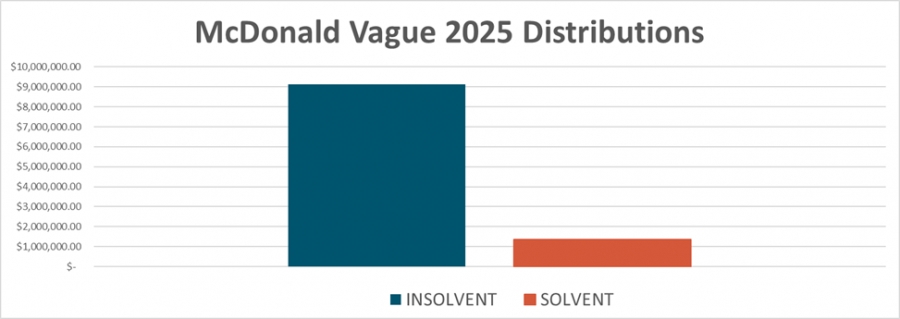
Across all insolvent and solvent appointments concluded within the 2025 calendar year, McDonald Vague paid out a total of:
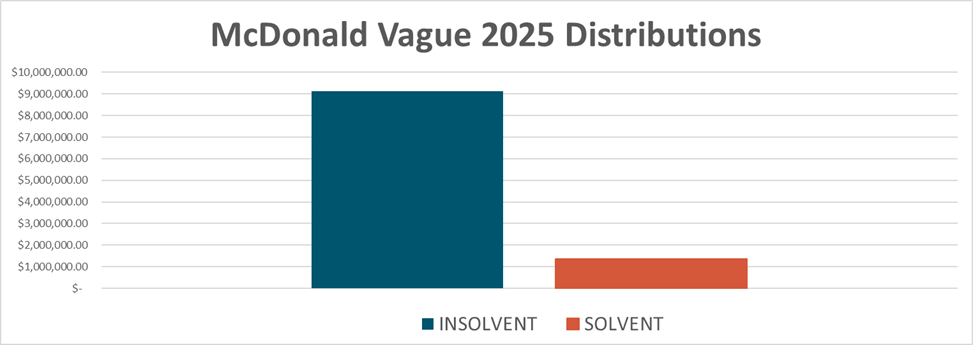
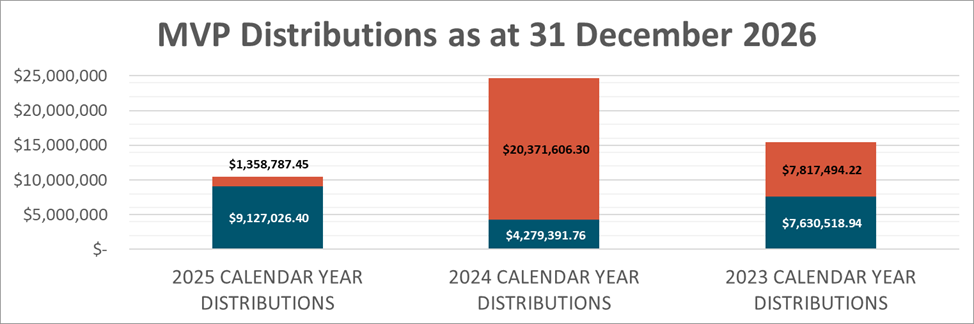
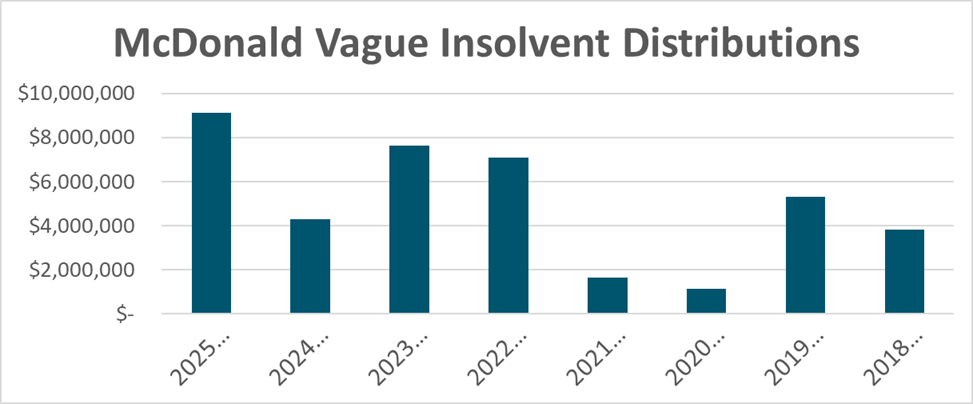
Insolvent Appointments: $9,127,026.40
Solvent Appointments: $1,358,787.45
These results reflect consistent performance across our portfolio rather than reliance on any single appointment.
Insolvent Company Distributions
In 2025, a total of $9,127,026.40 was distributed to creditors in insolvent company liquidations. These distributions were made across 56 separate appointments, demonstrating diversification of recoveries and steady throughput of work across the year.
The breakdown of these distributions is as follows:
Preferential Creditors: $547,455.30
Secured Creditors: $6,137,593.50
Unsecured Creditors: $2,441,977.60
Returning funds to unsecured creditors often the group with the least expectation of recovery continues to be a point of pride for our team.
Solvent Liquidation Distributions
Solvent liquidations also formed part of our 2025 workstream, delivering $1,358,787.45 back to shareholders across various appointments.
Solvent liquidations remain an efficient and legally robust mechanism for companies that have completed their purpose and can pay all liabilities within 12 months — a process we regularly support for business owners undertaking restructuring, group simplification, or succession planning.
Our Ongoing Focus
As one of New Zealand’s leading insolvency and business recovery firms, our emphasis remains on:
Maximising creditor returns
Responsible fee management
Efficient realisation and distribution of assets
Clear, practical communication with stakeholders
Each distribution reflects the practical value we deliver to creditors, business owners, and the wider commercial community.
If you would like to discuss any aspect of the 2025 results or require advice on an appointment, our licensed insolvency practitioners are available to help.
Section 253 of the Companies Act 1993 sets out:
“Duties, rights, and powers of liquidators
253 Principal duty of liquidator
Subject to section 254, the principal duty of a liquidator of a company is—
(a) to take possession of, protect, realise, and distribute the assets, or the proceeds of the realisation of the assets, of the company to its creditors in accordance with this Act; and
(b) if there are surplus assets remaining, to distribute them, or the proceeds of the realisation of the surplus assets, in accordance with section 313(4)—
in a reasonable and efficient manner.” – emphasis added